Loading...

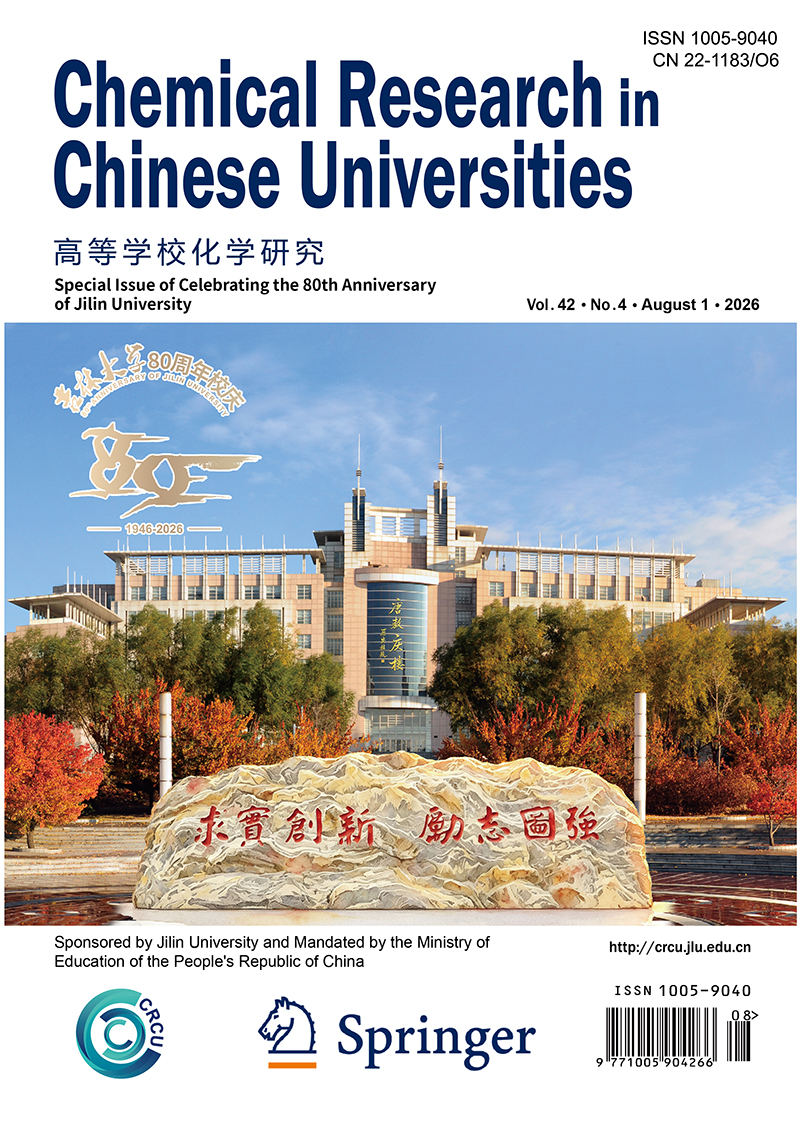
Table of Content

    01 August 2026, Volume 42 Issue 4
    Contents
    Chemical Research in Chinese Universities Vol.42 No.4 August 2026
    2026, 42(4):  0-0. 
    Abstract ( )   PDF (16129KB) ( )  
    Related Articles | Metrics
    Editorial
    Editorial of Special Issue of Celebrating the 80th Anniversary of Jilin University
    YU Jihong, WANG Dan
    2026, 42(4):  1013-1016.  doi:10.1007/s40242-026-6155-4
    Abstract ( )  
    Related Articles | Metrics
    Review Articles
    Recent Advances in Small Molecules-mediated DNA Conformations: From Structural Characteristics to Applications
    HU Yuwei, NIU Li
    2026, 42(4):  1017-1034.  doi:10.1007/s40242-026-6067-3
    Abstract ( )  
    References | Related Articles | Metrics
    In DNA nanotechnology, Watson-Crick-Franklin base-pairing is the dominant interaction driving the formation of various functional platforms, such as DNA origami, hydrogels, machines, condensates, etc. The introduction of noncanonical DNA secondary structures, including i-motif, G-quadruplex, triplex, A-motif, ion-bridged duplex, etc., renders these platforms with the capability to respond to external stimuli (pH, ions, light, etc.), which significantly expands their functionalities in smart response to external circumstances. Besides these, small molecules (or low-molecular-weight cofactors) also induce the transition of specific DNA sequences into noncanonical secondary structures. This review summarizes the recent progress of these small molecules, especially base analogues, including cyanuric acid (CA), melamine, etc., in constructing stimuli-responsive DNA structures and their implementation in various research fields. Their structural characteristics are systematically examined. Examples are also highlighted to showcase the wide applications of using these orthogonal small molecules-mediated DNA structures. A comparison to established methods is illustrated. Moreover, current challenges and future aspects are discussed.
    DNA-guided Fabrication of Inorganic Nanomaterials and Their Applications
    GUO Xinqing, LI Na, DING Baoquan
    2026, 42(4):  1035-1044.  doi:10.1007/s40242-026-6077-1
    Abstract ( )  
    References | Related Articles | Metrics
    DNA molecules and their nanostructures possess extraordinary programmability that facilitates guiding the synthesis of nanomaterials and assembly of nanoparticles in a controlled manner. The resulting products have unique advantages in many innovative and promising applications. In this review, we summarize the recent progress on DNA-guided fabrication of inorganic nanomaterials. We will introduce the representative work using DNA molecule or DNA nanostructure as templates to guide the synthesis of nanomaterials and the assembly of nanoparticles. In addition, the optical and biological applications of inorganic nanomaterials fabricated by DNA in recent years will be discussed in the following part. Finally, we will provide our views on future challenges and prospects in this field in the conclusion section.
    Recent Advances in Polyoxometalate@Porous-Framework Composite Catalysts for Oxidative Desulfurization
    CHANG Shenzhen, RUAN Banhao, ZHANG Jinhao, WU Qingxiang, PAN Qinhe
    2026, 42(4):  1045-1068.  doi:10.1007/s40242-026-6098-9
    Abstract ( )  
    References | Related Articles | Metrics
    Driven by the escalating global emphasis on green chemistry and sustainable development, the deep desulfurization of fossil fuels has emerged as a critical research frontier. Among various techniques, oxidative desulfurization (ODS) has garnered significant attention as a mild and efficient alternative to traditional hydrodesulfurization. Polyoxometalates (POMs) have been widely proven to exhibit excellent catalytic performance in ODS reaction due to their tunable electronic structure, abundant active-sites, and unique redox properties. However, the intrinsic solubility of POMs in polar media leads to challenges in catalyst recovery and recycling. To address these bottlenecks, the heterogenization of POMs via encapsulation within porous architectures has become a highly active research area. This strategy not only prevents the leaching, aggregation, and deactivation of POMs but also leverages the high surface area and pore environments to enhance mass transfer and substrate accessibility. This review will systematically summarize the POMs encapsulated in three typical porous supports, including inorganic mesoporous zeolites, organic porous frameworks, and organic-inorganic hybrid frameworks. By analyzing the synergistic effects between the POMs and the porous frameworks, this work will highlight how structural design influences catalytic efficiency and stability. Finally, we offer perspectives on the future challenges and design principles for developing high-performance ODS catalysts.
    Recent Advances in Aryne Generation Methods: From Classical Strategies to Cutting-edge Breakthroughs
    YIN Wenhao, QIU Dachuan, LI Yang
    2026, 42(4):  1069-1080.  doi:10.1007/s40242-026-6106-0
    Abstract ( )  
    References | Related Articles | Metrics
    This review summarizes the evolution of aryne generation methodologies, from early harsh approaches to recent mild and practical strategies. It aims to provide a systematic overview of advances over the past decade, with particular emphasis on the last five years. Key methods discussed include activation using bulky bases, cyclic onium salts, photochemical triggers, ringopening of four-membered rings, and transition-metal-assisted processes. These modern techniques enable aryne formation under milder conditions, with improved functional group tolerance, operational safety, and scalability. As a result, arynes have become versatile tools for constructing complex aromatic molecules, modifying pharmaceuticals, and performing bioorthogonal reactions. The review concludes by highlighting future directions, such as developing more accessible precursors, discovering new reaction modes, and expanding applications in drug discovery, materials science, and chemical biology.
    Recent Advances in Photoelectrochemical Synthesis of Value-added Chemicals
    CHAI Huan, LI Qi-Yuan, CHEN Jie-Sheng and LI Xin-Hao
    2026, 42(4):  1081-1100.  doi:10.1007/s40242-026-6115-z
    Abstract ( )  
    References | Related Articles | Metrics
    Photoelectrochemical (PEC) synthesis presents a transformative strategy for the sustainable production of value-added chemicals by synergistically utilizing light and electrical energy. This approach overcomes critical limitations of standalone photocatalysis and electrocatalysis. The strategic shift from PEC water splitting to synthesizing high-value chemicals (e.g., fuels, pharmaceuticals, polymers) addresses economic viability and environmental challenges. Key advantages include precise control over reaction pathways via bias/light tuning, enhanced selectivity, and the potential to utilize earth-abundant materials. Despite significant advances in materials and understanding, challenges remain in efficiency, stability, achieving high selectivity in complex reactions, and system scalability. This review discusses the current state of PEC synthesis and the progress needed to advance this technology toward industrial-scale green chemical manufacturing.
    Directed Hydrogenation of Solid Carbonates: Pioneering an Alternative Pathway for Syngas Production
    HE Jing, DUAN Xue
    2026, 42(4):  1101-1108.  doi:10.1007/s40242-026-6118-9
    Abstract ( )  
    References | Related Articles | Metrics
    Alkaline-earth metal carbonate, an inorganic mineral resource with abundant reserves and wide distribution on Earth, has historically been used as an ordinary non-metallic mineral to produce cement, building materials, etc. In the conventional usage of carbonate minerals, massive CO2 emission occurs. This review focuses on the remodel of carbonate decomposition reaction from CO2 emission to directed hydrogenation, pioneering a pathway of syngas production from inorganic carbon resource. The state-of-the-art development of hydrogenated decomposition of solid carbonates has been summarized. The carbonate chemical pathway for CO2 capture, as well as the recent progress of integrated carbon capture-conversion (ICCC), is also discussed.
    Research Progress on Photo-assisted Metal-air Batteries: Mechanism, Challenges and Enhanced Performance Study
    WANG Huanfeng, WANG Yue, XU Mingze, LIANG Shuang, SONG Lina, WANG Xiaoxue, XU Jijing
    2026, 42(4):  1109-1123.  doi:10.1007/s40242-026-6122-0
    Abstract ( )  
    References | Related Articles | Metrics
    Metal-air batteries possess exceptional energy densities but are hindered by excessive overpotentials from sluggish oxygen reduction/evolution reaction (ORR/OER) kinetics. Integrating a photo-assisted mechanism offers a promising strategy to bypass these limitations by using photovoltage and photogenerated carriers to enhance catalytic kinetics. However, this coupling introduces critical challenges, including rapid carrier recombination, semiconductor photocorrosion, light-induced electrolyte degradation, and severe performance dependence on illumination. To address these critical bottlenecks, this review systematically elucidates the working mechanisms, system expansion, and performance control strategies for six types of photo-assisted metal-air batteries (Li, Zn, Na, Sn, Al and Fe), such as donor-acceptor engineering to broaden light absorption and facilitate charge transport, heterojunctions construction and defect engineering to suppress carrier recombination, diverse material systems and dual-photoelectrode strategy to boost catalytic kinetics, as well as the electrolyte engineering to improve its stability. Further, future perspectives are outlined, including in-depth analyses of dynamic mechanisms, the development of photostable electrodes, photo-resistant electrolyte systems, the regulation of all-weather performance and the establishment of standardized testing protocols, aiming to provide theoretical guidance for the rational design and engineering application of efficient and stable photo-assisted metal-air batteries.
    Process-directed Self-assembly of Block Copolymers: Theories and Computer Simulations
    SUN Dewen, AN Lijia
    2026, 42(4):  1124-1147.  doi:10.1007/s40242-026-6124-y
    Abstract ( )  
    References | Related Articles | Metrics
    processes that can reproducibly direct the kinetics of structure formation ensuing from an unstable state, generated by rapidly altering the thermodynamic parameter(s) of system, into a desired, metastable state. Compared with the strategy that focuses on the alleviation of the packing frustration of desired, metastable states by fine-tuning the chain architecture of the block copolymer or blending and therefore makes them thermodynamically stable, it is particularly suitable for the fabrication of desired, metastable states with high packing frustration, which is very hard to release. Moreover, this strategy also provides ample opportunities for the explorations on the symmetry-conserving and symmetry-altering phenomena during the kinetics of structure formation. This review mainly focuses on the theories and particle-based simulations that can be used to explore the process-directed self-assembly of block copolymers. Several representative results, which are obtained by both theories and particle-based simulations using the alchemical transformation and fast, isotropic pressure quench, respectively, to generate the unstable states as the starting points, are reviewed as well to highlight the efficiency of such a strategy as well as the symmetry-conserving and symmetry-altering phenomena during the kinetics of structure formation. The challenges encountered currently are also briefly discussed.
    Synergistic Physicochemical Effect of Neighboring Atoms in Nano Hollow Multishelled Structure: A Platform for Breaking the Activity-Stability Imbalance
    JIANG Haomin, TANG Pan, YANG Jizhao, YU Ranbo, WANG Dan
    2026, 42(4):  1148-1161.  doi:10.1007/s40242-026-6131-z
    Abstract ( )  
    References | Related Articles | Metrics
    Modulation of surface curvature and intershell neighboring-atom physicochemical synergy empowers nano hollow multishelled structure (HoMS) curved-surface single-atom catalysts (CS SACs) to overcome the inherent activity-stability trade-off of conventional SACs. This mini-review summarizes three fabrication strategies for curved carbon supports, focusing on in-situ templated HoMS construction and multishelled neighbor atomic synergy. Different from classic single-layer curved single-atom catalysts, the hierarchical curved interfaces of HoMS realize cooperative regulation between inner single atoms and neighbor outer-shell heteroatoms via electrostatic repulsion, breaking Gibbs free-energy scaling relations and adsorption/desorption limitation to simultaneously optimize catalytic activity and durability. Recent progress of CS SACs in oxygen reduction reaction (ORR), nitrogen reduction reaction (NRR), carbon dioxide reduction reaction (CO2RR) and hydrogen evolution reaction (HER) is overviewed. We elaborate that substrate curvature optimizes intermediate adsorption behaviors via modulating the electronic configuration, lattice strain and local interfacial electric field surrounding isolated metal active sites. Most importantly, existing limitations and future directions targeting precise HoMS engineering are highlighted to guide the rational design of highperformance single-atom electrocatalysts.
    Recent Advances in Electron-doping of Quantum Dots: Synthesis, Optical Properties, and Optoelectronic Applications
    LEI Haixin, WANG Zhe, LIN Xing, PENG Xiaogang
    2026, 42(4):  1162-1176.  doi:10.1007/s40242-026-6133-x
    Abstract ( )  
    References | Related Articles | Metrics
    Stably and controllably doping free carriers, here specifically free electrons, into colloidal quantum dots (QDs) is central to realizing their size-tunable optical and optoelectronic properties. Unlike bulk semiconductors, aliovalent atomic doping in QDs is challenging due to self-purification mechanism. This mini-review focuses on recent advances in one type of unique doping strategies for QDs (i.e., remote electron-doping into their quantum-confined conduction band), including chemical, electrochemical, and photochemical approaches. We discuss optical properties, many-body interactions, and Fermi-level shifts of n-doped QDs. Impacts of n-doping on low-threshold optical gain, infrared intraband emission and detection, and charge-transport layers in devices are discussed.
    Recent Advances in Techniques for Identifying Spin-state Species in Fe-based Metal Catalysts
    GONG Tianyu, LIU Gaoyuan, DUAN Jiawei, ZHANG Jia-Nan
    2026, 42(4):  1177-1192.  doi:10.1007/s40242-026-6138-5
    Abstract ( )  
    References | Related Articles | Metrics
    Developing high-performance non-precious metal catalysts for the oxygen reduction reaction (ORR) is crucial to advancing the commercialization of proton exchange membrane fuel cells. In recent years, the research focus has shifted from identifying geometrically active sites (e.g., Fe-N4) to elucidating a key electronic-structure descriptor: the spin state. However, the complexity and heterogeneous nature of catalyst materials pose significant challenges to the precise identification of spin species. This review systematically summarizes the latest advances in this field. Drawing on representative literature examples, it highlights how advanced spectroscopic techniques, including Mössbauer spectroscopy, X-ray absorption spectroscopy, and electron paramagnetic resonance, enable the precise characterization of Fe spin states. These methodological advances progressively uncover the fundamental structure-activity relationship between spin states and ORR activity, thereby providing crucial scientific foundations and forward-looking directions for the rational design of next-generation high-performance catalysts.
    Two-dimensional Amorphous Metal Oxides for Electrochemical Energy Storage and Conversion
    YANG Kai, ZHENG Tian, FU Yikang, GUO Tianqi, HU Pengfei, GUO Lin
    2026, 42(4):  1193-1210.  doi:10.1007/s40242-026-6139-4
    Abstract ( )  
    References | Related Articles | Metrics
    Amorphous nanomaterials, which combine short-range order with long-range disorder, provide defect-rich platforms for tailoring electronic structure. This review surveys the controllable synthesis of two-dimensional amorphous metal oxides (2D AMOs)—spanning top-down, topotactic, template-directed, and wet-chemical paradigms—with an emphasis on regulating the amorphous phase while preserving the 2D morphology. We then examine key structural-modification strategies, including phase engineering, single-atom anchoring, conductive hybridization, and defect manipulation. Building on these foundations, their applications in electrochemical energy storage and conversion are discussed to clarify the underlying structure-property-performance relationships. Finally, the remaining bottlenecks and future perspectives are outlined, charting a roadmap toward practical, scalable use.
    Applications of Covalent Organic Frameworks in Element Extraction from Salt Lakes: A Review
    GUO Wei, LIU Huapeng, ZHANG Xiaotao, HU Wenping
    2026, 42(4):  1211-1223.  doi:10.1007/s40242-026-6172-3
    Abstract ( )  
    References | Related Articles | Metrics
    The increasing demand for strategic mineral resources, together with the need for low-carbon and environmentally responsible extraction technologies, has made the efficient utilization of salt-lake resources an urgent research priority. Salt-lake brines contain abundant Li, Na, K, Cs, B, U, and other valuable elements, but their high salinity and complex multi-ion matrices pose major challenges to selective separation. Covalent organic frameworks (COFs), a class of crystalline porous polymers with designable skeletons, tunable pore environments and modifiable functional sites, offer a promising platform for element extraction from salt lakes. This review summarizes recent advances in the design of COFs for salt-lake resource recovery, with particular emphasis on functional-site engineering, pore regulation, ion-recognition mechanisms and representative applications in the capture and separation of lithium, potassium, cesium, boron, and uranium. Current limitations, including scalable synthesis, long-term stability, and the transition from empirical design to mechanism-guided material development, are also discussed. This review is expected to provide useful guidance for the rational design of high-performance COF materials for sustainable salt-lake resource utilization.
    Perspective
    Large Language Models-assisted Literature Analysis Towards Photocatalysis: A Case of Artificial Nitrogen Photofixation
    CHENG Xiang, GAO Junyu, LI Jiali, ZHAO Yunxuan, ZHANG Tierui
    2026, 42(4):  1224-1228.  doi:10.1007/s40242-026-6125-x
    Abstract ( )  
    References | Related Articles | Metrics
    Artificial nitrogen photofixation enables green ammonia synthesis under ambient conditions, making it one of the cutting-edge technologies in the fields of energy transition and sustainable development. Rapid growth in nitrogen photofixation has yielded a massive volume of publications, posing new challenges for manual literature screening, mechanism integration, and future trend analyses. Large language models (LLMs), with their robust capabilities in semantic understanding, information extraction, and logical reasoning, can significantly facilitate literature mining in photocatalysis. Taking artificial nitrogen photofixation as a case study, this perspective constructs an LLM-assisted literature analysis system and explores the practical value of intelligent analytical technologies in view of the emerging tendency. Furthermore, we also explore the anticipated contributions and challenges of artificial intelligence in photocatalysis, particularly regarding material design, experimental optimization, and mechanism investigation, with the aim of establishing a forward-looking roadmap for a low-carbon future in photocatalysis.
    Research Articles
    Modulating Organic Transistor Performance by Optimizing Organic-Organic Interface Charge Transfer
    SHEN Xueli, XUE Di, YIN Yao, YAN Chi, WANG Wenchong, XIE Miao, HUANG Lizhen, CHI Lifeng
    2026, 42(4):  1229-1236.  doi:10.1007/s40242-026-6015-2
    Abstract ( )  
    References | Related Articles | Metrics
    Organic heterojunctions have demonstrated significant potential in modulating the properties and performance of organic electronic devices through interfacial charge effects. However, these effects are critically dependent on the electronic structure and film morphology, which can lead to unpredictable variations in device performance. In this study, we systematically investigated the interfacial charge transfer between two thiophene derivatives and achieved optimized organic field-effect transistor (OFET) performance through interface engineering. The heterojunction is constructed via 2,7-dihexyl-dithieno[2,3-d;2',3'-d']benzo[1,2-b;4,5-b']dithiophene (DTBDT-C6) and dicyanovinylterthiophene (DCV3T), with density functional theory (DFT) calculations revealing distinct HOMO-LUMO distributions that facilitate charge transfer at the interface. This is further confirmed through in situ photoluminescence spectroscopy, X-ray photoelectron spectroscopy (XPS) and Kelvin probe force microscopy (KPFM). The OFET performance exhibits a pronounced thickness dependence, where both the off-state current and charge mobility initially increase but subsequently decrease with increasing DCV3T thickness. This behavior is attributed to the competing effects of enhanced conductivity and thickness-dependent injection barriers at the interface. By spatially confining DCV3T to an optimal thickness at the electrode-semiconductor interface together with dielectric surface modification, we achieved a balanced performance with a super on/off current ratio of 107 and a high mobility over 1 cm2·V-1·s-1. These results underscore the importance of heterojunction engineering in advancing device operation.
    Activatable Molecular Imaging Probe Targeting Pancreatic Lipase for Early Diagnosis of Pancreatic Diseases
    ZHANG Lanyun, WANG Lishi, ZHAO Chen, LI Jingkang, JIAO Shan, MA Pinyi, SONG Daqian
    2026, 42(4):  1237-1244.  doi:10.1007/s40242-026-6026-z
    Abstract ( )  
    References | Related Articles | Metrics
    Acute pancreatitis involves the abnormal activation of pancreatic enzymes triggered by diverse pathological factors, resulting in tissue edema, autodigestion, hemorrhage, necrosis, systemic inflammation, and potentially, multi-organ failure. Pancreatic lipase (PL) plays a central role in this cascade, initiating pancreatic autodigestion at the early stages of the disease. Leveraging this pathophysiological hallmark, we developed a novel near-infrared (NIR) fluorescent probe, NRO-PL, using 9-(diethylamino)-2-hydroxy-5H-benzo[a]phenoxazin-5-one as the fluorophore and lauroyl chloride as the PL-responsive moiety. Synthesized via a straightforward protocol, the probe had high sensitivity toward PL (limit of detection=2.9 mU/mL) and was successfully employed in real-time visualization of enzyme activity. In vitro studies demonstrated that the probe could accurately track the dynamics of PL in cell models of pancreatitis. In vivo imaging in murine models revealed the probe’s strong contrast and specificity for inflamed pancreatic tissues. This probe is a valuable molecular tool for real-time monitoring of PL activity. It can be employed to provide new insights into the enzyme mechanisms underlying the progression of pancreatitis.
    Efficient Synthesis of Rare-earth-based KFI from Spent Fluid Catalytic Cracking Catalyst
    GUAN Linjie, LIU Pei, WU Qinming, XIAO Feng-Shou
    2026, 42(4):  1245-1250.  doi:10.1007/s40242-026-6065-5
    Abstract ( )  
    References | Related Articles | Metrics
    Cu-KFI zeolite with 8-membered rings has been recognized as a highly promising catalyst for the ammonia selective catalytic reduction (NH3-SCR), but the Al-rich feature for this zeolite strongly influences its hydrothermal stability. One of the effective strategies for solving this issue is to introduce rare earth elements in the zeolite. Herein, we showed an efficient synthesis of LaCe-KFI zeolite from a spent fluid catalytic cracking (FCC) catalyst containing La and Ce species as the raw material under solventfree conditions. Interestingly, the introduction of rare-earth elements in KFI zeolite could maintain the stability of active copper species and zeolite framework under hydrothermal aging conditions at 800 ℃ for 12 h, resulting in excellent hydrothermal stability and superior catalytic performance in NH3-SCR reaction. This novel method for zeolite production not only boosts catalytic efficiency but also facilitates the sustainable recycling of industrial solid waste, in good agreement with the tenets of green chemistry.
    Bio-inspired Hierarchical Microsuckers for Dry-Wet Amphibious Adhesion
    ZHANG Yikai, ZHAO Ran, ZHAN Yize, ZHANG Feilong, WANG Shutao
    2026, 42(4):  1251-1259.  doi:10.1007/s40242-026-6081-5
    Abstract ( )  
    References | Related Articles | Metrics
    While biomimetic suction cups have been broadly implemented in diverse fields including soft robotics, intelligent equipment, and precision manufacturing, current research efforts are predominantly directed at improving adhesion performance in isolated dry or underwater environments, with scarce attention paid to achieving consistent, full-scenario stable adhesion of suction cups across wet/dry amphibious conditions. Herein, we developed a hierarchical microsucker system with polyampholyte hydrogel for high-performance wet/dry amphibious adhesion. This system, which synergizes the intrinsic dynamic ionic bonds of polyampholyte hydrogel with multi-stage negative pressure enhancement, achieves robust adhesion in both underwater and dry conditions. The normal adhesion force of the hierarchical microsuckers is 1.82 times (wet state) and 1.88 times (dry state) higher than those of single-level microsuckers, respectively. Furthermore, this hierarchical polyampholyte hydrogel microsuckers can be integrated as a functional adhesive layer for robotic dexterous hands, enabling reliable grasping of objects on rough surfaces in complex underwater environments. This work provides a novel strategy for cross-medium robotic dexterous hand applications.
    Multiplexed Lateral Flow Immunoassay with Catalytic Signal Amplification for Simultaneous Quantitative Detection of Five Cardiac Biomarkers in Acute Chest Pain Triage
    SONG Dan, WANG Haodong, SUN Xudong, WU Fuchao, TONG Qian, WANG Zhen-Xin
    2026, 42(4):  1260-1268.  doi:10.1007/s40242-026-6114-0
    Abstract ( )  
    References | Related Articles | Metrics
    Acute chest pain is a life-threatening clinical emergency requiring rapid differentiation of acute myocardial infarction (AMI), acute aortic dissection (AAD), and pulmonary embolism (PE). Conventional diagnostics are limited by bulky equipment, delayed processing, and insufficient specificity. We developed a portable dual-readout lateral flow immunoassay (Multi-AuPd@FexOy-LFIA) for one-step identification of high-risk acute chest pain etiologies, enabling simultaneous determination of five key biomarkers: soluble suppression of tumorigenicity 2 (sST2), D-Dimer, cardiac troponin I (cTnI), myoglobin (MYO), and C-reactive protein (CRP). A 3D-printed smartphone cradle and APP enabled automated signal readout. The multi-AuPd@FexOy-LFIA exhibits low limits of detection (LODs) of 0.036 ng/mL (sST2), 0.008 μg/mL (D-Dimer), 0.017 ng/mL (cTnI), 0.732 ng/mL (MYO), and 3.327 μg/mL (CRP). Based on the analysis of the concentrations of the five biomarkers in 137 clinical plasma samples, least absolute shrinkage and selection operator (LASSO) machine learning establishes a four-category classification model, with areas under curves (AUCs) reaching 0.99―1.00 for distinguishing healthy donors, AMI, AAD, and PE. The established machine learning diagnostic algorithm is further integrated into the App, enabling Multi-AuPd@FexOy-LFIA to achieve quantitative detection and early differential diagnosis of acute chest pain.
    Probing Alcohol-induced Conformational Changes of Polyglycolic Acid at the Single-molecule Level
    TIAN Jing, XIAO Wenwen, YUAN Wentao, BAO Yu, CUI Shuxun
    2026, 42(4):  1269-1274.  doi:10.1007/s40242-026-6120-2
    Abstract ( )  
    References | Related Articles | Metrics
    Polyglycolic acid (PGA)-based materials are frequently exposed to alcohol environments in biomedical and related applications. Although alcohols can significantly influence the macroscopic properties of PGA-based materials, the underlying molecular mechanisms remain elusive. In this study, atomic force microscopy-based single-molecule force spectroscopy (SMFS) was employed to systematically investigate how monohydric alcohol solvents affect the single-chain conformation and mechanical response of PGA, with its inherent elasticity used as a benchmark. SMFS experimental results show that the single-chain elasticity of PGA is highly consistent across different monohydric alcohols but deviates moderately from its inherent elasticity. Density functional theory calculations further demonstrate that both the ester carbonyl oxygen and the ester alkoxy oxygen in each PGA repeating unit can interact with those solvent molecules via hydrogen bonds, which are likely to generate steric crowding around the polymer backbone, thereby promoting chain expansion toward a more extended conformation and ultimately altering the single-chain mechanical response. These findings elucidate the single-molecule mechanism underlying monohydric alcohol-regulated PGA chain conformation and provide guidance for optimizing PGA-based materials in alcohol-containing environments.
    Electrochemical Proton Injection Induced Phase Transitions in Hydrothermally Synthesized A-Site Multi-doped Manganate Perovskites
    PANG Shiqi, GUO Junda, LIANG Qiujuan, ZHENG Beining, HAN Mei, FENG Shouhua
    2026, 42(4):  1275-1281.  doi:10.1007/s40242-026-6121-1
    Abstract ( )  
    References | Related Articles | Metrics
    Phase transitions in strongly correlated system materials have good reproducibility due to the differences before and after the transition, and they have application prospects in fields, such as memory storage and electrochromic materials. Driving protons in ionic liquids into the material lattice using an electric field is an effective way to change the electronic structure of strongly correlated systems and induce their phase transitions. In this study, we used the electrochemical proton injection method to introduce protons into La1-x-yCaxKyMnO3 manganate perovskites with different properties. The combination of protons with O in the lattice hinders the double exchange interaction, preventing effective electron transfer and thereby triggering a phase transition. This work complements the understanding of the effects of proton injection on bulk materials, deepens the understanding of the mechanism of proton injection-induced phase transitions, and provides new ideas for the preparation of novel multifunctional devices.
    Organosilicon Borneol Ester/Quaternary Ammonium Salt Based Attack-Defense Coatings for Durable Antibacterial and Antifungal Cotton Textiles
    NIU Wenjing, WANG Songtao, LIU Yi, LIANG Wanli, XIE Wensheng, LI Guofeng and WANG Xing
    2026, 42(4):  1282-1287.  doi:10.1007/s40242-026-6123-z
    Abstract ( )  
    References | Related Articles | Metrics
    Cotton textiles (CTs) are in high demand for antimicrobial applications. Traditional approaches often struggle to achieve antibacterial and antifungal efficacy simultaneously. Herein, organosilicon quaternary ammonium salt (QAS/AEM-5700, a contact bactericidal agent) and organosilicon borneol ester (SBA, a stereochemical anti-adhesive agent) are covalently co-grafted onto CT surfaces via siloxane hydrolytic condensation, generating a synergistic antimicrobial coating (CT-A/S) that integrates both offensive and defensive functionalities. The as-prepared CT-A/S exhibits excellent antimicrobial activity against Escherichia coli (E. coli), Staphylococcus aureus (S. aureus), and Aspergillus niger (A. niger), with antimicrobial rates approaching 100%. Owing to the covalent immobilization, the CT-A/S demonstrates outstanding laundering durability. This strategy not only overcomes the deficiency of QAS-modified CT in mold resistance, but also addresses the limitation of borneol ester in contact-based bacterial killing. Furthermore, an in vivo mice infection model validates the antibacterial and anti-infective efficacy of the coating, offering a promising approach for the long-term antimicrobial protection of healthcare textiles.
    Flexible Organic Ultraviolet Filters with Tunable Cutoff Wavelength for Enhancing Irradiation Stability of Organic Solar Cells
    ZHANG Jianjun, LU Xin, LIU Zhen, WEI Ruizhi, LUO Qi, ZHOU Xianmin and ZHOU Yinhua
    2026, 42(4):  1288-1294.  doi:10.1007/s40242-026-6128-7
    Abstract ( )  
    References | Related Articles | Metrics
    High-energy ultraviolet (UV) component of sunlight causing interfacial photochemical decomposition limits the operational stability of organic solar cells (OSCs). To maintain the mechanical flexibility of OSCs, flexible UV filters with tunable cutoff wavelength are desired to improve irradiation stability of devices under sun light. Here, we report the preparation of flexible UV filters by incorporating a benzotriazole-based UV absorber (UV326) and transparent polyimide (PI). The incorporation of UV326 in PI improves the stability of PI under UV radiation as well as enables spectrally selective UV management. The resulting flexile UV326@PI composite films exhibit excellent UV resistance with a tunable cutoff wavelength ranging from 370 nm to 400 nm. OSCs devices protected by the UV326@PI filter with a cutoff wavelength of 400 nm retained 82.6%±4.4% of their initial power conversion efficiency (PCE) after 400 h of continuous UV lamp irradiation (395 nm, 345 mW/cm2), whereas unprotected control devices degraded to 54.5%±4.2%. The flexible UV filters with tunable cutoff wavelengths could provide a possible route to enhance the photostability of flexible OSCs.
    Construction of D-π-A Emitters with High Molar Extinction Coefficient via Two-state Resonance
    WANG Xinyu, GAN Hanlin, LEI Jinpu, LIN Ling, LIU Jiangbo, WEN Donghao, TAN Wenle, WANG Bohan, YU Yue, MA Yuguang
    2026, 42(4):  1295-1300.  doi:10.1007/s40242-026-6132-y
    Abstract ( )  
    References | Related Articles | Metrics
    The molar extinction coefficient (ε) is a fundamental physical parameter for optoelectronic molecules, critically determining the energy conversion efficiencies of corresponding devices. Benefiting from strong intramolecular resonance enabled by donor-acceptor (D-A) structural modulation, merocyanine dyes are capable of delivering large ε at relatively low molecular weights. Such resonance originates from the equilibrium between neutral and zwitterionic resonance forms, whose magnitude can be quantitatively evaluated using the resonance coefficient c2. Specifically, a c2 of 0.5 corresponds to ideal strong resonance and superior photophysical performance. Herein, two D-π-A emitters, namely N-O-2CN and N-S-S, were rationally developed. Both molecules possess prominent two-state resonance characteristics, with calculated c2 values of 0.44 and 0.45, respectively. Consistently, the two compounds display outstanding molar absorptivity: N-O-2CN affords a maximum ε of 6.43×10⁴ L·mol-1·cm-1 at 468 nm. More impressively, N-S-S reaches an exceptionally high ε of 1.23×10⁵ L·mol-1·cm-1 at 509 nm while bearing a low molecular weight of merely 377, which facilitates favorable processing capability. In addition, N-O-2CN and N-S-S exhibit narrowband blue and green luminescence, with full-widthat-half-maximum of 0.26 eV at 491 nm and 0.20 eV at 532 nm, respectively.
    Hydroxyl Radical-assisted Synthesis of NaA Zeolite Membranes in an Open System
    YIN Xin, LI Shanghua, ZONG Siyu, ZHOU Yida, ZHANG Boyu, GU Qinfen, SHANG Jin, YU Jihong
    2026, 42(4):  1301-1309.  doi:10.1007/s40242-026-6135-8
    Abstract ( )  
    References | Related Articles | Metrics
    NaA zeolite membranes are widely utilized in the separation field. However, their large-scale application has been constrained by the requirement of bulky, sealed autoclaves, resulting in high synthesis costs. Herein, we developed a hydroxyl radical-assisted hydrothermal strategy to synthesize NaA membranes. This method enables the synthesis of highly crystalline and continuous NaA membranes within only 8 h at 45 ℃ in an open system. Notably, we scaled up the synthesis to achieve uniform crystallization on a 10 cm×6 cm substrate, overcoming the scalability limitations inherent to traditional autoclave-based synthesis. The versatility of this approach is further demonstrated by its applicability to diverse substrates, including metal oxides, glass, and polymers. Through a combination of ex-situ characterization techniques [X-ray diffraction (XRD), scanning electron microscopy (SEM)] and spectroscopic analysis [electron paramagnetic resonance (EPR), fluorescence], we confirm the critical role of hydroxyl radicals in accelerating membrane formation. Furthermore, the broad applicability of this method is validated by the successful synthesis of high-quality FAU zeolite membranes. This work establishes a new paradigm for zeolite membrane synthesis, paving the way for their industrial-scale production and broader practical applications.
    Pre-deposited Conductive Polymer Layer Suppressing Silver Nanowire Embedding in TPU for Stretchable Transparent Electrodes and Flexible Organic Solar Cells
    XU Xintong, XU Nuo, YANG Leishuo, ZHU Juan, LI Yaowen
    2026, 42(4):  1310-1319.  doi:10.1007/s40242-026-6142-9
    Abstract ( )  
    References | Related Articles | Metrics
    Silver nanowire (AgNW)-based transparent electrodes are promising candidates for flexible and stretchable organic optoelectronics. However, their integration with low-glass-transition-temperature elastomers remains challenging because AgNWs can become excessively embedded in the polymer matrix during thermal processing, resulting in increased sheet resistance and poor interfacial contact. Herein, we develop an inverted layer-by-layer transfer strategy based on a pre-deposited conductive polymer layer to fabricate TPU@AgNWs@S-PH1000 stretchable transparent electrodes. In this design, BTSL-doped PEDOT:PSS PH1000 (S-PH1000) [PEDOT:PSS, poly(3,4-ethylenedioxythiophene):poly(styrenesulfonate)] is first deposited on a smooth glass substrate, followed by AgNW coating and TPU transfer. The pre-deposited S-PH1000 layer planarizes the AgNW network, improves interfacial adhesion, and suppresses excessive AgNW embedding into the TPU matrix during annealing. As a result, the electrode exhibits reduced surface roughness, high transmittance, a broadened thermal-processing window, and excellent stretchability, remaining conductive under 60% tensile strain and after 1000 stretching cycles at 10% strain. When applied to flexible organic solar cells, the pre-deposited electrode increases the power conversion efficiency from 14.71% to 16.22%, mainly owing to lower resistance, enhanced interfacial contact, higher transmittance, and reduced non-radiative recombination. This work provides an effective strategy for constructing stretchable transparent electrodes for flexible photovoltaic applications.
    Serum Small Extracellular Vesicle Proteomic Analysis Based on Functionalized Nanobowl Enrichment for Screening Candidate Biomarkers of Breast Cancer
    ZHAO Jialiang, HU Caiwei, FENG Jie, ZHOU Bokai, WU Guangyao, JIN Mingshi, BAI Yu
    2026, 42(4):  1320-1330.  doi:10.1007/s40242-026-6143-8
    Abstract ( )  
    References | Related Articles | Metrics
    Triple-negative breast cancer (TNBC) is an aggressive breast cancer subtype with limited therapeutic targets, highlighting the necessity for serum-based candidate biomarker discovery. In this study, we developed a serum small extracellular vesicle (sEV) proteomic workflow based on functionalized nanobowl enrichment and a simple on-beads lysis and in-tube digestion pretreatment for sEVs. And 107 clinical serum samples were analyzed, each requiring only 50 microliters of serum. A total of 3477 proteins were quantified, and 3152 proteins detected in >50% of samples were used for statistical analysis. After quality control, 102 samples were analyzed by differential analysis, co-expression network analysis, and functional enrichment analysis. The results showed distinguishable serum sEV protein profiles among TNBC, healthy controls, benign breast diseases, and other breast cancer groups. Six candidate proteins were identified, among which thrombospondin-2 (THBS2) showed a stable increase in TNBC. This study provides a practical basis for serum sEV-based biomarker discovery in TNBC.
    Poly(L-selenomethionine) Hydrogel Reprograming Microenvironments for Full-Thickness Diabetic Chronic Wound Repair
    XIE Mengtian, SUN Yirong, LIU Zongtai, LU Hua, DING Jianxun, CHEN Xuesi
    2026, 42(4):  1331-1340.  doi:10.1007/s40242-026-6145-6
    Abstract ( )  
    References | Related Articles | Metrics
    Full-thickness repair of chronic wounds poses significant clinical challenges. Although antioxidant and anti-inflammatory effects accelerate the healing of chronic wounds, achieving complete skin regeneration with appendages remains challenging in clinical practice. Herein, a unique selenium-containing thermo-sensitive hydrogel, poly(ethylene glycol)-block-poly(L-selenomethionine) (EG45SeMet25), is designed to reprogram the wound microenvironments and promote skin appendage regeneration in diabetic chronic wounds. EG45SeMet25 forms an injectable sol at room temperature and undergoes a sol-gel transition at body temperature, enabling complete filling of irregular wound defects. Moreover, EG45SeMet25 enhances cell proliferation and effectively scavenges intracellular reactive oxygen species (ROS), thereby exerting cytoprotective effects. Meanwhile, it modulates macrophage polarization to establish a pro-regenerative immune microenvironment. EG45SeMet25 significantly promotes the healing of full-thickness skin wounds in diabetic mice. After 14 d, the remaining unhealed wound area decreases to 2.53% of that in the Control group, accompanied by accelerated angiogenesis and a significant increase in skin appendage formation. In summary, EG45SeMet25 is a promising antioxidant organic selenium hydrogel that not only interrupts the "ROS-inflammation" cycle but also enables functional full-thickness skin repair, offering a unique strategy for treating chronic wounds.
Editor-in-Chief:
Jihong YU
ISSN 1005-9040
CN 22-1183/O6
Special Issue/Column
Scan and join us
Visited
Total visitors:
Visitors of today:
Now online: